
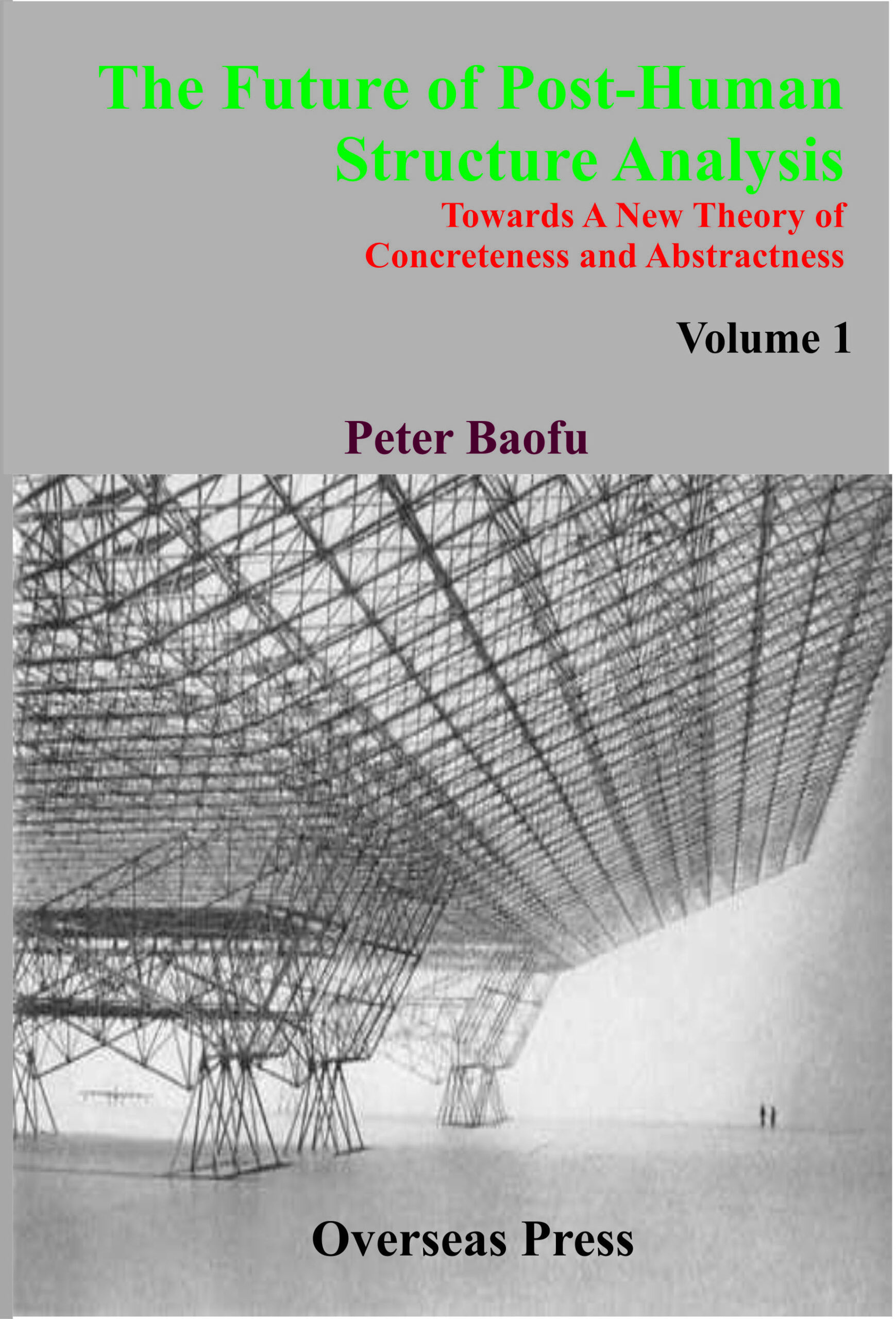
Book Abstract
Is the world really so structured that Paul Valery once asserted that “the universe is built on a plan the profound symmetry of which is somehow present in the inner structure of our intellect”? (TE 2015)
This bold assertion about the structure of the world can be contrasted with a modest claim by Albert Einstein, who replied that “what I see in Nature is a magnificent structure that we can comprehend only very imperfectly, and that must fill a thinking person with a feeling of humility.” (TE 2015a)
Contrary to these opposing views (and other ones as will be discussed in the book), structure analysis (in relation to concreteness and abstractness) is neither possible (or impossible) nor desirable (or undesirable) to the extent that the respective ideologues (on different sides) would like us to believe of course, this questioning of the opposing views does not mean that structure analysis is useless, or that those diverse fields (related to structure analysis)—like science, physics, biology, geology, chemistry, engineering, sociology, finance, computing, architecture, art, music, mathematics, logic, linguistics, philosophy, literature, and so on—should be dismissed. (WK 2014) Indeed, neither of these extreme views is plausible.
Instead, this book offers an alternative (better) way to understand the future of structure analysis in regard to the dialectic relationship between concreteness and abstractness—while learning from different approaches in the literature but without favoring any one of them (nor integrating them, since they are not necessarily compatible with each other). More specifically, this book offers a new theory (that is, the unificatory theory of structure analysis) to go beyond the existing approaches in a novel way.
This seminal project will fundamentally change the way that we think about structure analysis (in relation to the dialectic relationship between concreteness and abstractness) from the combined perspectives of the mind, nature, society, and culture, with enormous implications for the human future and what I originally called its “post-human” fate.
Reviews
There are no reviews yet.