
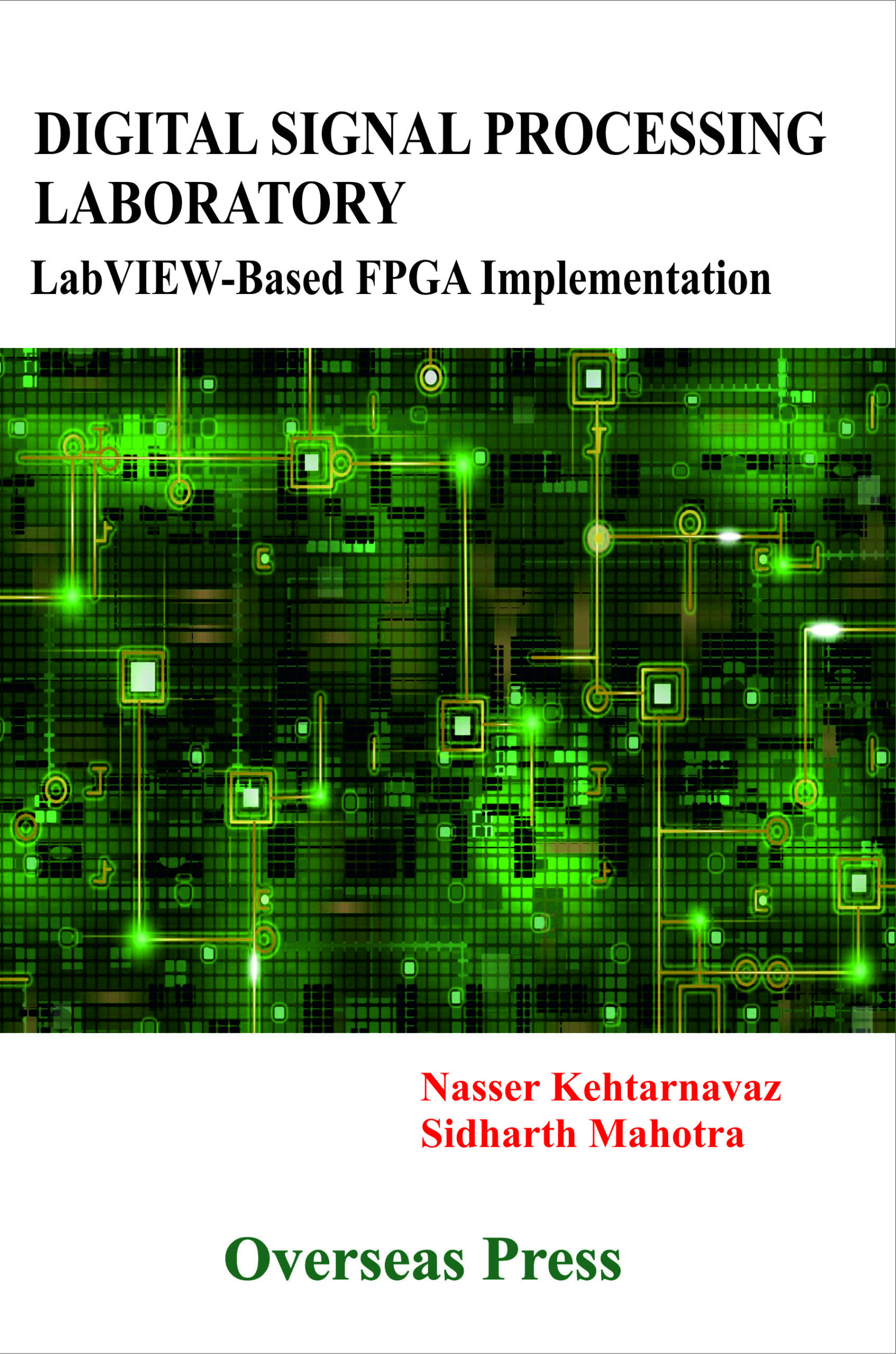
Nasser Kehtarnavaz writes the following message:
I have been teaching DSP Lab or Applied DSP courses for many years. I started with DSP assembly programming of TI DSP processors. Then, as DSP compilers became more efficient, I put more emphasis on the C programming of floating-point DSP processors and later on the C programming of fixed-point DSP processors. More recently, I introduced the hybrid programming approach in DSP lab courses. Hybrid programming involves the combination of graphical programming and textual programming. I used the LabVIEW graphical programming environment due to its interactivity features and its ability to build DSP systems in a time-efficient manner within a one-semester course or a short design cycle time. Again, this year I changed the content of my DSP lab course in order to teach students how to implement DSP algorithms on FPGA processors. The reason for this change has been the ever increasing demand by industry for FPGA implementation skills of DSP algorithms. This laboratory textbook is the outcome of our newly designed labs at the University of Texas at Dallas based on the LabVIEW FPGA Module which provides the necessary tools to carry out simulation, synthesis, and real-time implementation in a hybrid manner and in one easy-to-use environment.
I would like to express my gratitude to National Instruments for their financial support and feedback enabling us to write this book for the benefit of DSP students as well as DSP engineers. I would also like to thank the UTD graduate students Chandrasekhar Patlolla and Jeremy Brodt for their FPGA implementation codes as part of the last three application chapters. Last but not least, I would like to greatly appreciate my graduate student Sidharth Mahotra for co-authoring this book with me. Without his participation, I would not have been able to put together this book within a short period of one year.

Reviews
There are no reviews yet.