
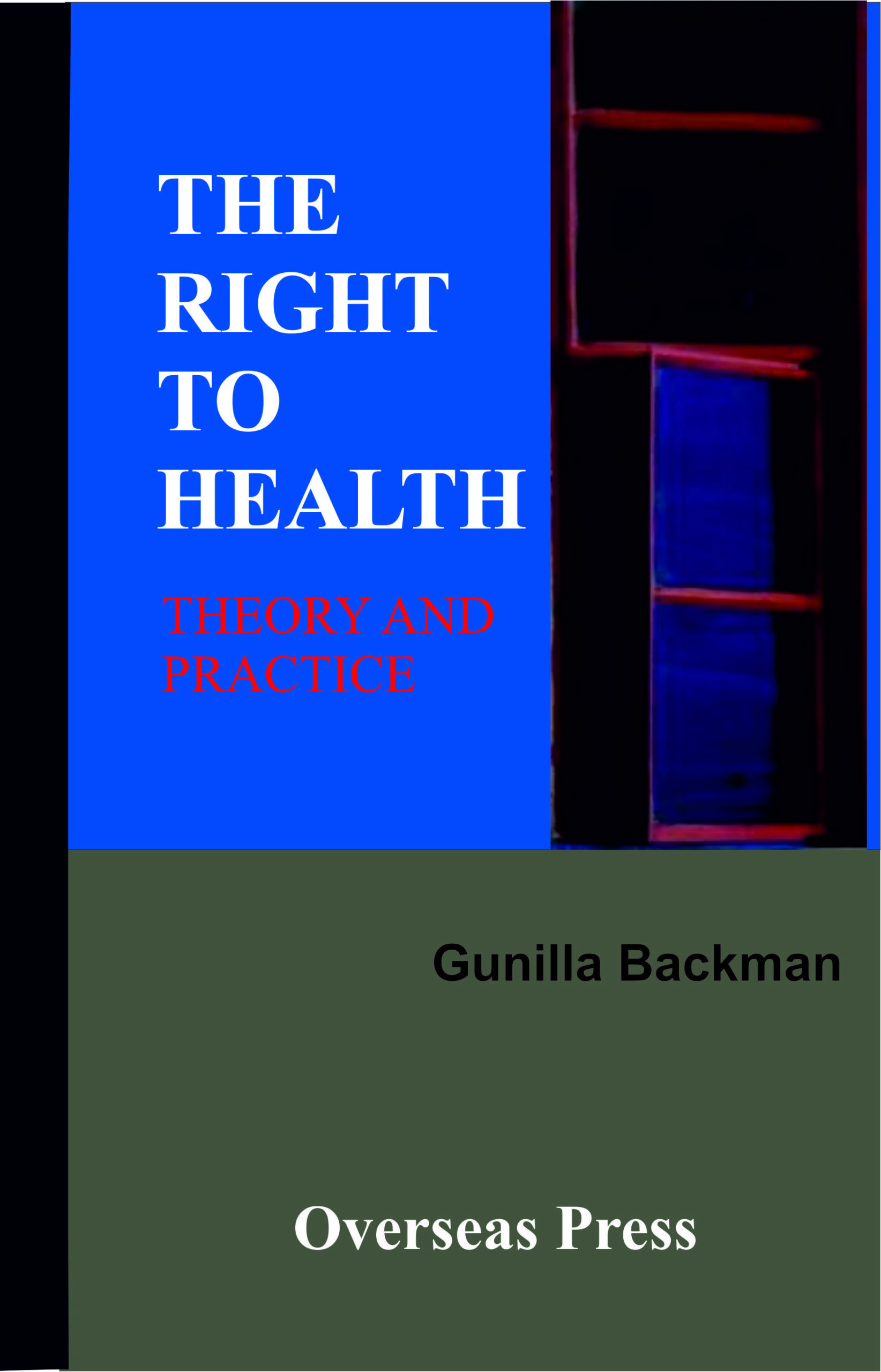
Health and human right law (the right to health) are tow very powerful and influential professional areas. Their objectives are similar: to improve the well-being of the whole population and to ensure that everyone, without discrimination, has access to quality health services. Although there has been an increased understanding of the meaning and tools of the right to health, its practical application is poorly understood and has been difficult to convey. Health workers and policy makers ask questions such as, if human rights (the right to health) are practical, what are the tools and how do you use them? Will a right-based approach improve the health and well being of the population?
This student guide, written for and by health and human rights students and professionals, aims to present the foundation in public health and human rights, with a specific focus on the right to health. Health cases from developed and developing countries are used to show how different fields (health, ethics, law, and the right to health), broadly defined, interact or can interact with one another to improve health outcomes. It presents what some of the right to health and tools are, how to apply them.
“The first of its kind, this student guide bridges health and human rights in theory and practice. It brings together leading experts in the fields of health and human rights in order to explore and demonstrate how the right to health can be and has been operationalised in practice. It deepens our understanding of health and human rights and will likely stimulate new perspectives in this field.”
Anand Grover, UN Special Rapporteur on the Right to Health.
Gunilla Backman (ed.) is health advisor to conflict and post-conflict countries at the Swedish International Development Cooperation Agency and a doctoral student at the London School of Hygiene and Tropical Medicine, UK. She was also a senior research officer to Paul Hunt, the first UN Special Rapporteur on the Right to Health (2002-2008).
Reviews
There are no reviews yet.